
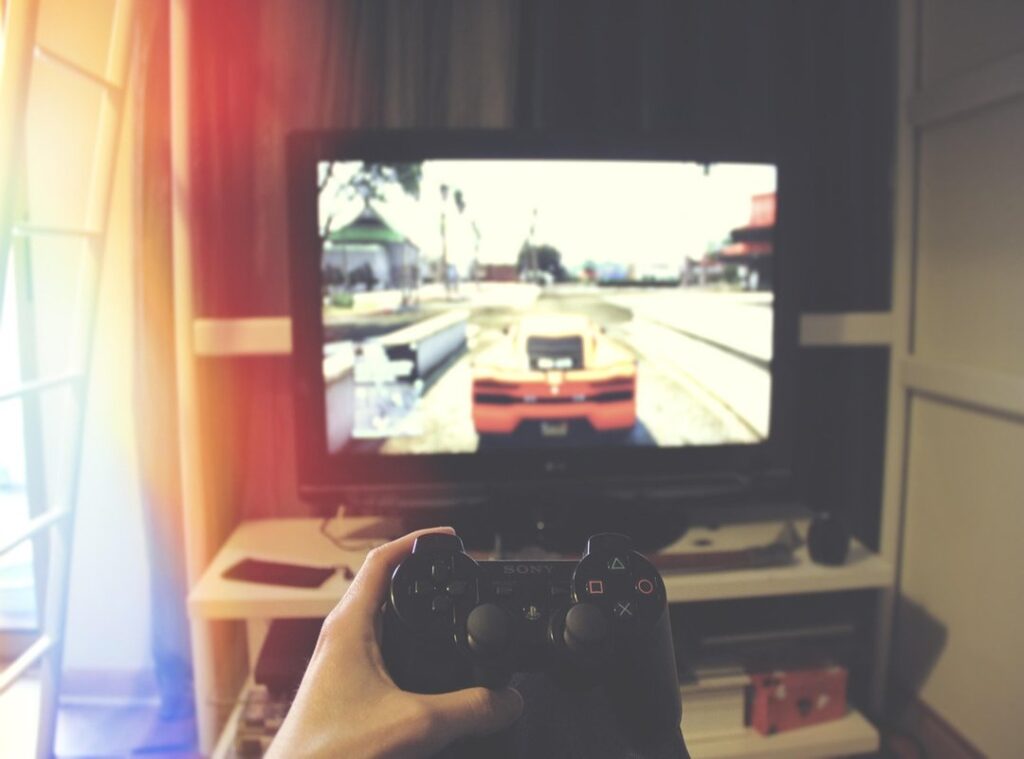
Do you ever play a game and feel like your actions matter? Like every move leads to a real consequence? That’s the magic of game physics simulations.
But many gamers love these experiences without truly understanding what makes them tick. It’s frustrating. You want that thrill, yet the mechanics can seem mysterious.
I’ve spent years diving deep into the world of gaming, analyzing trends and innovations. I get how these physics engines create those unforgettable moments. This guide will pull back the curtain on interactive physics-based gaming experiences.
Here, I’ll break down what they are, how they work, and why they’re shaking up the industry.
By the end, you’ll have a clearer picture of what makes these games so engaging. This isn’t just theory; it’s a glimpse into the future of gaming. Let’s explore together.
Game Physics: The Core of Interactive Play
When I talk about an interactive physics-based game, I’m not just talking about games with pretty explosions. It’s about game physics simulations that go beyond simple collision detection. These games simulate real-world laws like gravity, friction, and momentum.
Ever wondered why a character’s fall feels so real? That’s ragdoll physics doing its job. But there’s more to it.
Imagine a world where every move you make, every action you take, affects the gameplay. This is what separates the good from the great. Games that use physics as a backdrop pale in comparison to those where physics is central.
It’s about realism (or sometimes hyper-realism) and unscripted outcomes.
But why should you care? Because it creates a depth and unpredictability that static games just can’t match. Remember playing a game where a vehicle’s handling depended on the terrain?
That’s physics in action. It makes the virtual world believable.
And if you’re fascinated by how these elements tie into storytelling, check out narrative structures interactive storytelling. It blends the physical and narrative seamlessly. So ask yourself: Do you want a mere escape or an engrossing, changing experience?
The Engine Room: Physics Engines in Gaming
Ever wonder what makes a game world feel real? It’s all about the physics engine. Think of Havok, PhysX, or those built-in solutions in Unity and Unreal.
These engines are the invisible brains behind those changing worlds you love. They handle everything from how solid objects collide (rigid body dynamics) to how your character’s cape flows in the wind (soft body physics). It’s fascinating.
And let’s not forget fluid dynamics. Imagine water and smoke moving realistically in your favorite game. These concepts translate directly into killer gameplay mechanics: destructible environments, spot-on projectile paths, and vehicles that actually feel like they should.
Now, I know what you’re thinking. Isn’t all this computation a bit much? You’re right.
It’s a challenge. But advancements in real-time physics simulations have made it possible. These engines aren’t just about realism.
They’re about creating a consistent, predictable world where players can do pretty much anything.
Curious about how this works in practice? Check out game physics simulations to dive deeper into the science behind it. Trust me, you won’t look at your favorite game the same way again.
Isn’t that what makes gaming so exciting?
Beyond Simulation: Creative and Playful Physics
Who says game physics simulations need to be all about realism? I’m here to tell you that’s nonsense. Games like “Portal” and “Bridge Constructor” prove that bending physics can be the ultimate puzzle.
You know what I mean if you’ve ever tried to balance a bridge in Bridge Constructor. It’s not about making it look real; it’s about making it work.
Then there are sandbox games like “Garry’s Mod” and “Teardown.” These games let you unleash creativity. Build, destroy, experiment. The physics here isn’t a tool for realism; it’s a playground.
Want to see how many props you can pile onto a tiny car before it breaks? This is your chance.
Think of “Human Fall Flat” or “Gang Beasts.” Exaggerated physics, hilarious outcomes. These games are about fun, not simulation. You don’t need a degree in physics to enjoy these; you just need a sense of humor.
If you’re curious about how these mechanics affect players, the psychology behind player engagement is fascinating. It shows how physics in games isn’t just about simulation. It’s about creating experiences that challenge and entertain.
Who knew falling off a cliff could be so much fun?
The Player’s Perspective: Why Physics-Based Games Feel So Good
Ever played a game and felt like you could touch the world inside it? That’s what game physics simulations do. They pull you in with a level of immersion that other games just can’t match.

When I toss a virtual rock, I expect it to bounce, roll, or maybe even break something (just like in real life). This makes the game world feel alive, like it’s reacting to me, and not just following a script.
The best part? Every time I play, something new happens. These games thrive on emergent gameplay.
I remember one time when a simple action led to an unexpected chain reaction. Suddenly, I had a story to share. (You know, those “watercooler moments” we all love.) It’s this unpredictability that keeps me coming back.
And let’s talk about control. When I see my actions have logical, visible consequences, I feel like a part of the world. It’s not just about beating a level.
It’s about feeling like I made a difference. That’s solid. Problem-solving in these games isn’t just about following steps.
It’s about creativity. One time, I used a barrel to solve a puzzle in a way the developers probably didn’t even plan. Felt like a genius.
But sometimes, I just want to laugh. Watching characters flop around, or structures collapse in chaos, is strangely satisfying. It’s like watching a comedy show unfold.
This blend of control and chaos creates a richer, more changing experience. And that’s what keeps me (and) probably you. Hooked.
The Future Horizon: Interactive Physics in Gaming
Ever thought about how far we can push game physics simulations? We’re on the brink of a new era. I can almost taste the excitement.
Imagine games where real-time simulations aren’t just words, but experiences. Highly deformable objects and detailed fluid simulations are becoming reality. Remember when that stuff seemed impossible?
VR and AR are about to flip the script on how we interact with virtual worlds. You know how you reach out to touch something in a game and your hand passes through it? That could change.
You’ll be able to feel the weight of a virtual sword or the texture of an alien space. It’s like magic, but with science.
And cloud computing? Oh boy, it’s a game-changer. No more limits based on your hardware.
We’re talking massive, interconnected physics simulations. The action won’t lag when the scene gets intense. Imagine a multiplayer battle where debris from explosions affects gameplay in real-time.
Who wouldn’t want that?
But what about integration with AI and procedural generation? Well, that’s the next frontier. AI could learn from environments, adapting to game physics in ways we can’t predict.
Procedural generation might create worlds that are beautiful but physically coherent. Imagine stumbling upon a hidden cave that fits the space perfectly. Sounds pretty cool, right?
The quest for changing, believable worlds continues. Developers want us to feel like we’re not just playing a game, but living in it. And they’re closer than ever to making that happen.
The future is bright for interactive physics in gaming. It’s going to be wild, and I can’t wait to see what’s next.
Explore the Depth of Gameplay
We’ve cracked the code on what makes interactive gaming so captivating. You might feel the magic of changing games but struggle to understand why. By grasping the mechanics behind game physics simulations, you can appreciate the creativity that goes into your favorite titles.
So why not dive into new physics-based games? Revisit the classics with fresh eyes or explore game development basics to see physics in action. The gaming world is waiting for you.
Don’t just play. Engage deeply and discover the magic. Get started today and boost your gaming experience.
 As the primary competitive analyst and strategist, Zaythe Kintarrow focuses on the nuances of high-stakes play and fighting game mechanics. Zaythe is dedicated to breaking down the latest trends in the esports scene, offering masterclasses on strategic positioning and frame-perfect execution. Through comprehensive guides and real-time trend reporting, Zaythe empowers players to refine their skills and adopt the advanced tactics necessary to dominate in a multiplayer environment.