
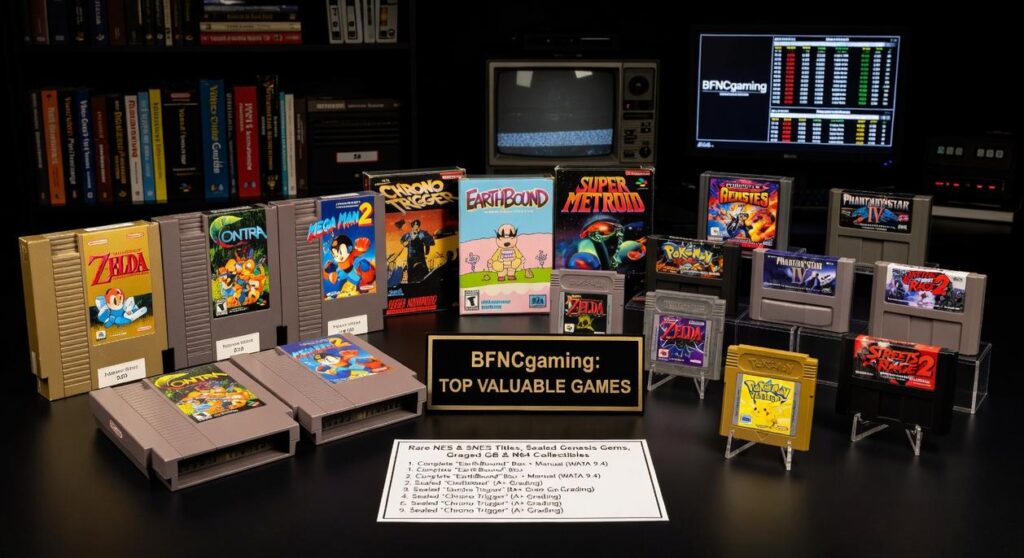
I’ve bought and sold thousands of video games over the years, and I can tell you most people get valuation completely wrong.
You’re probably sitting on a collection wondering which games are actually worth something. Maybe you’ve checked a few prices online and got confused by the wild differences. Or you’re about to start reselling and don’t want to leave money on the table.
Here’s the truth: age doesn’t equal value. Neither does nostalgia.
What video games are valuable comes down to three specific factors that professional collectors use every single day. I’m talking about the same criteria that determine whether a game sells for $5 or $500.
I’ve tracked market data across thousands of sales. I’ve watched games spike in value and others tank despite the hype. That’s how I know this method works.
This guide breaks down the exact framework you need. Condition, Rarity, and Demand. These three elements tell you everything about a game’s real worth.
You’ll learn how to spot the details that matter and ignore the ones that don’t. No guesswork. No hoping you priced something right.
Just a clear system for figuring out what your games are actually worth.
The Three Pillars of Video Game Valuation
You want to know if that old game in your closet is worth something.
I get asked this all the time. Someone finds a box of cartridges from the 90s and thinks they’ve struck gold.
The truth? Most of those games aren’t worth much. But some are worth a lot.
The difference comes down to three things. Master these and you’ll know exactly what video games are valuable bfncgaming collectors actually want.
Condition is King
Here’s what matters most: how complete is your game?
Complete in Box (CIB) means you have the game, the original box, and the manual. This is the baseline for serious collectors.
Loose means just the cartridge or disc. No box, no manual, nothing else.
New Old Stock (NOS) or sealed? That’s the holy grail. Factory sealed games can sell for 5x to 10x what a loose copy goes for.
I’ve seen a loose copy of Chrono Trigger sell for $80. The same game CIB? $400. Sealed? Over $1,200.
The box condition matters too. A crushed box with water damage won’t command the same price as a pristine one (even if the game inside is identical).
True Rarity vs. Perceived Age
Some people think old equals valuable.
It doesn’t.
Super Mario Bros. for NES is from 1985. It’s also one of the best-selling games ever made. You can buy a copy for under $10 because millions of them exist.
Real rarity comes from low print runs. Games released late in a console’s life when everyone moved on. Titles that got recalled or pulled from shelves. Games for failed systems like the Sega 32X or Virtual Boy.
Suikoden II for PlayStation had a tiny print run. It’s worth hundreds even loose because so few copies exist.
Age is just a number. Scarcity is what counts.
Market Demand and Cultural Significance
Here’s the thing nobody tells you.
A rare game that nobody wants is still worthless.
You need demand. That comes from a game’s legacy, its cult following, or its importance to gaming history.
Take EarthBound for SNES. It wasn’t a massive seller when it came out in 1995. Nintendo practically gave copies away with strategy guides because it flopped commercially.
But it became a cult classic. The quirky humor, the unique setting, the incredible soundtrack. Gamers who played it never forgot it.
Now? A CIB copy sells for $600 to $800. That’s demand driving value, not just rarity.
The same principle applies across the board. Games that defined genres, introduced beloved characters, or simply meant something to a generation of players will always command higher prices.
High-Value Genres and Platforms to Watch
You know that feeling when you’re digging through a thrift store and spot a game that looks familiar?
Your heart starts racing a bit. You pull out your phone to check prices.
That’s the moment that separates casual gamers from serious collectors.
Here’s what most people don’t realize. Not all old games are valuable. But certain genres and platforms? They’re sitting on gold mines.
The JRPG Goldmine (SNES, PS1, PS2)
Japanese RPGs from the 16-bit and 32-bit eras are where the real money lives.
I’m talking about games like Chrono Trigger. Complete in box? You’re looking at serious cash. The Suikoden series on PS1 and PS2 follows the same pattern (Suikoden II alone can run you over $500 in good condition).
Why are these so valuable?
First, the storytelling was DEEP. These weren’t just games. They were 40-hour emotional experiences that people still remember decades later. Second, print runs in North America were often tiny compared to Japan. Publishers didn’t think Americans wanted complex RPGs with anime art styles.
They were wrong. But by the time they figured it out, those first prints were already scarce.
Survival Horror’s Shelf Appeal
Original print runs of Silent Hill and Resident Evil games on PlayStation 1 and 2 command premium prices.
Silent Hill 2 in particular has seen a massive spike. Part of it is the recent remake bringing new attention. Part of it is that survival horror fans are DEDICATED collectors who want the original experience.
These games scared us in ways that still hold up. Tank controls and all.
Niche Consoles, Niche Treasures
Want to know where the real finds are hiding?
Look at the consoles that flopped commercially. Sega Saturn, TurboGrafx-16, Neo Geo. These platforms had small user bases, which meant small print runs. But the people who owned them? They loved them fiercely.
Neo Geo games can sell for THOUSANDS. Not because they’re better than everything else. Because they’re rare and the community that collects them has deep pockets.
It’s like owning a DeLorean. Not the most practical choice, but the people who want one really want one.
First Prints vs. ‘Greatest Hits’
This is where beginners lose money.
That black label PS1 copy of Final Fantasy VII? Worth significantly more than the green “Greatest Hits” version sitting right next to it. Same game. Different value.
Original releases are what collectors want. The “Greatest Hits,” “Player’s Choice,” and “Platinum” re-releases were mass-produced later. They’re common.
When you’re checking what video games are valuable bfncgaming style, always verify which version you’re holding. The label color matters. The spine matters. Even the manual printing matters.
I’ve seen people sell a $200 game for $30 because they didn’t know the difference.
Don’t be that person.
Essential Tools for Accurate Price Research
You can’t price a game correctly if you don’t know what people are actually paying for it.
Sounds obvious, right? But I see collectors make this mistake all the time. They check one price, assume it’s accurate, and either overpay or undersell by 50% or more.
Here’s what works.
Start with PriceCharting.com
I use PriceCharting as my baseline. It tracks historical sales data for games in loose, complete in box (CIB), and new condition.
The benefit? You get a quick snapshot of where a game has been trading over weeks or months. You can spot trends. See if a title is climbing or dropping.
But don’t treat it as gospel. It’s a starting point, not the final word.
eBay’s ‘Sold’ Listings Are Your Best Friend
This is where you find real prices.
Ignore the active listings. Someone can list a game for $500, but that doesn’t mean anyone will buy it. What matters is what people actually paid.
Go to eBay, search your game, then filter by “Sold Items.” You’ll see exactly what buyers handed over cash for in the past few weeks.
This is the most accurate measure of current market value. Period.
When you’re researching what video games are valuable bfncgaming, this step separates guesswork from data.
Tap into Community Knowledge
Reddit’s r/gamecollecting is where I go for market sentiment. You’ll find discussions about rare variants, price spikes, and warnings about reproductions flooding the market.
The benefit here isn’t just prices. It’s context. You learn why a game is moving up or what makes a particular variant worth more.
Watch Out for Fakes
High-value Nintendo handheld games (especially GBA and DS titles) get counterfeited constantly.
Look for incorrect label art, cheap plastic that feels wrong, and mismatched board stamps inside the cartridge. If you’re dropping serious money on gaming news bfncgaming, you need to know what authentic looks like.
The payoff? You protect yourself from expensive mistakes and build confidence in your buying decisions.
Common Myths: What DOESN’T Make a Game Valuable
Ever pulled an old game from your closet and thought you hit the jackpot?
I hate to break it to you.
Age doesn’t mean value. Not even close.
Some people swear that any game from the 90s or early 2000s must be worth something. They see “vintage” and think “valuable.” But that’s not how this works.
Take Wii Sports. It came out in 2006. That’s almost 20 years ago. And you know what it’s worth? Maybe five bucks on a good day.
Why? Because Nintendo made millions of copies. Every single Wii console came bundled with it. Same story with Super Mario/Duck Hunt on the NES (which sold over 28 million copies worldwide).
Old? Yes. Valuable? Not a chance.
Here’s the real kicker though. Popularity works against you too.
Sound familiar? You find an old Madden or FIFA game and figure it must be worth something because everyone played it. But that’s exactly the problem. Everyone bought it. The supply is massive and collector demand is basically zero.
Annual sports titles flood the market every year. Nobody wants last year’s roster when this year’s version exists.
What video games are valuable bfnc gaming comes down to one thing: supply versus demand. A game can be 40 years old and popular, but if millions of copies exist, collectors aren’t paying premium prices.
The games that actually hold value? They’re usually the ones that didn’t sell well initially or had limited production runs.
Funny how that works.
From Collector to Confident Appraiser
I’ve watched too many collectors get burned.
They assume age equals value. They overpay for games that look rare but aren’t. They miss real treasures sitting on their own shelves.
What video games are valuable bfncgaming comes down to three things: Condition, Rarity, and Demand. Master these pillars and you stop guessing.
You don’t need to be an expert to spot the difference between a common classic and a collectible worth serious money. You just need a framework that works.
This systematic approach cuts out the emotion. No more wondering if you’re getting ripped off or leaving money on the table.
You came here to learn how to assess value accurately. Now you have that skill.
Start Building Your Knowledge Today
Here’s what I want you to do: Pull a few games off your shelf right now. Research them using the tools I mentioned in this guide.
Check their condition against grading standards. Look up actual sales data, not just listing prices. See what demand looks like in the current market.
You might be surprised what you find. That game you thought was worthless could be funding your next purchase. Or that “rare” title might not be worth what you paid.
The difference between collectors who build value and those who waste money is simple. One group knows how to evaluate games properly.
You’re in that first group now.
 cole80 founded BFNC Gaming as a premier destination for enthusiasts seeking a deeper understanding of the digital landscape. With a focus on the intersection of technical skill and industry innovation, cole80 has curated a platform that explores everything from the intricate frame data of fighting game mechanics to the complex world of game development techniques. Under his leadership, the site serves as an essential resource for players looking to master competitive multiplayer strategies while staying ahead of the latest global gaming trends.